
Habits are hard to break and even more challenging to form, making behaviour change incredibly difficult. But that doesn’t mean it can’t be done. Once you understand that behaviour change is a science and something to approach methodically, it becomes achievable. After all, if it weren’t possible to create sustainable behaviours, none of us would ever form new habits. The difference is that getting someone else to adopt a sustainable behaviour isn’t as simple as doing it yourself. It requires tactics and a deeper level of understanding. So, let’s dive into the details.

What Is Classed as Sustainable Behaviour?
First, it’s important to acknowledge that ‘sustainable behaviour’ can be interpreted in multiple ways. It can refer to behaviours that are environmentally sustainable – eco-friendly actions designed to create positive change. However, it can also mean a behaviour that is personally sustainable, meaning it integrates well into a person’s lifestyle and is maintained over time.
Take running, for example. Some people set out to run 5km overnight in order to become a runner, but most don’t continue with it. However, those following a ‘Couch to 5km’ plan are more likely to maintain running as a habit because they gradually adapt over time.
For the purpose of this article, we’re focusing on the latter definition for sustainable behaviours – though, interestingly, personal sustainability can also support eco-friendly behaviours. Now that we’ve clarified this, let’s explore how to achieve it.

The COM-B Model
As we mentioned earlier, behaviour change is a science. There are several elements within the behaviour change wheel, but let’s start with the fundamentals. To create new sustainable behaviours or habits, three core elements must be present:
- Capability
- Opportunity
- Motivation
If an individual lacks any of these three elements when adopting a new behaviour, it is unlikely to stick. Returning to the running analogy, for someone to take up running as a hobby, they need motivation (a desire to run), opportunity (available time), and capability (at least a pair of running shoes).
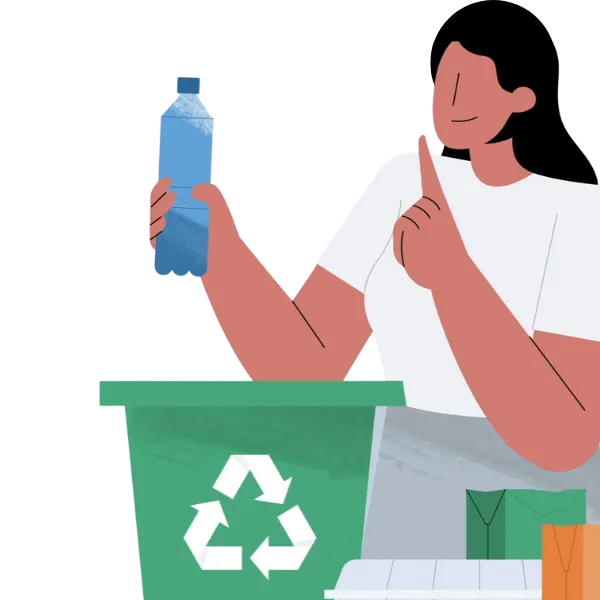
It doesn’t take much for one of these elements to be lost, which is why, if you’re trying to introduce someone to a sustainable habit, you need to ensure these factors are in place. Encouraging someone to recycle more, for instance, won’t work if they aren’t regularly reminded of what can and can’t be recycled.

Unlocking Change with Nudging Touchpoints
Of course, even if you provide someone with capability, motivation, and opportunity, success isn’t guaranteed. If behaviour change were that simple, you wouldn’t be reading this article!
The COM-B model is just the starting point. Think of it as setting the foundation for success. The real key to sustainable behaviour change lies in regular touchpoints. Subtle reminders that encourage individuals to stay engaged with the behaviour you introduced.
We see this strategy in action all the time. Take social media, for example. To increase user engagement, platforms introduced push notifications, alerting users to updates without requiring them to open an app. This is one of the most effective nudging touchpoints ever created.
The psychology behind sustainable behaviour is less about instruction and more about understanding. Think of it not as a sales pitch, but as education and guidance – helping individuals feel supported as they develop new habits. With the right approach, even the most challenging behaviour changes can become second nature.